
Promotion conversation simulator
A self-directed AI-enabled conversation simulation where learners make their own case for promotion to a manager who responds to what they say. Built twice, a year apart, on the same learning design.
- Role
- Sole designer
- Sector
- Corporate
- Format
- AI-enabled conversation simulation
- Tools
- Storyline 360 · JavaScript · Claude Design
The original idea
Making a strong case for promotion is a performance problem.
Advice on what to say is easy to find. Knowing what makes a persuasive case isn't the same as being able to make one in the room.
I narrowed it down to three things the learner needed to be able to do:
01 — Evidence
Articulate achievements using specific, concrete evidence.
02 — Alignment
Connect those achievements to something the organization cares about.
03 — Readiness
Demonstrate readiness to operate at the next level.
Learners needed to practice demonstrating them, not pick a good answer from a list. So they build the case in their own words.
Designing the first experience
I built the original simulation in Storyline 360, using JavaScript to connect the experience to ChatGPT.
The learner makes their case to a manager. No response options, no predetermined route — the manager responds to what they actually say.
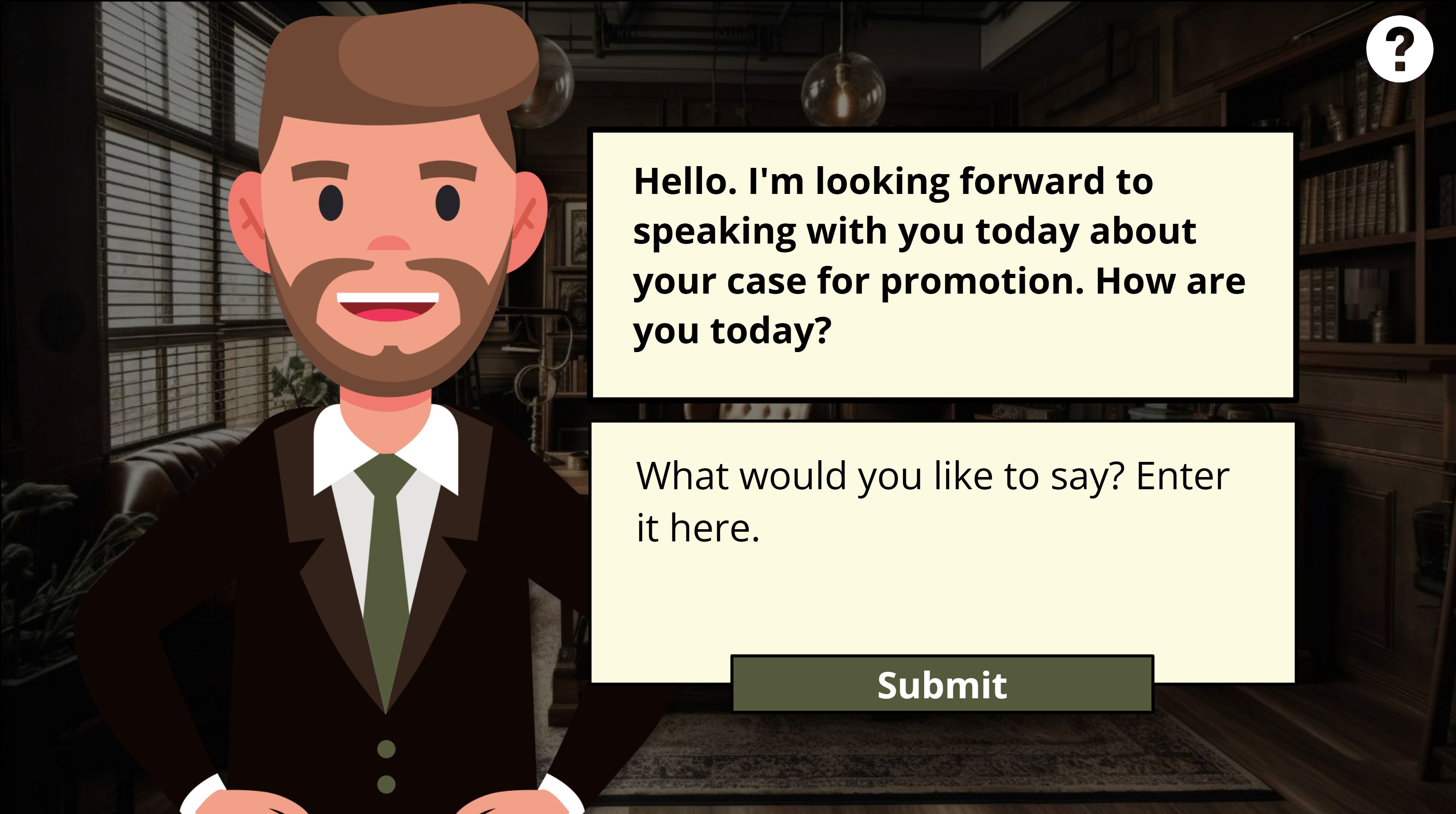
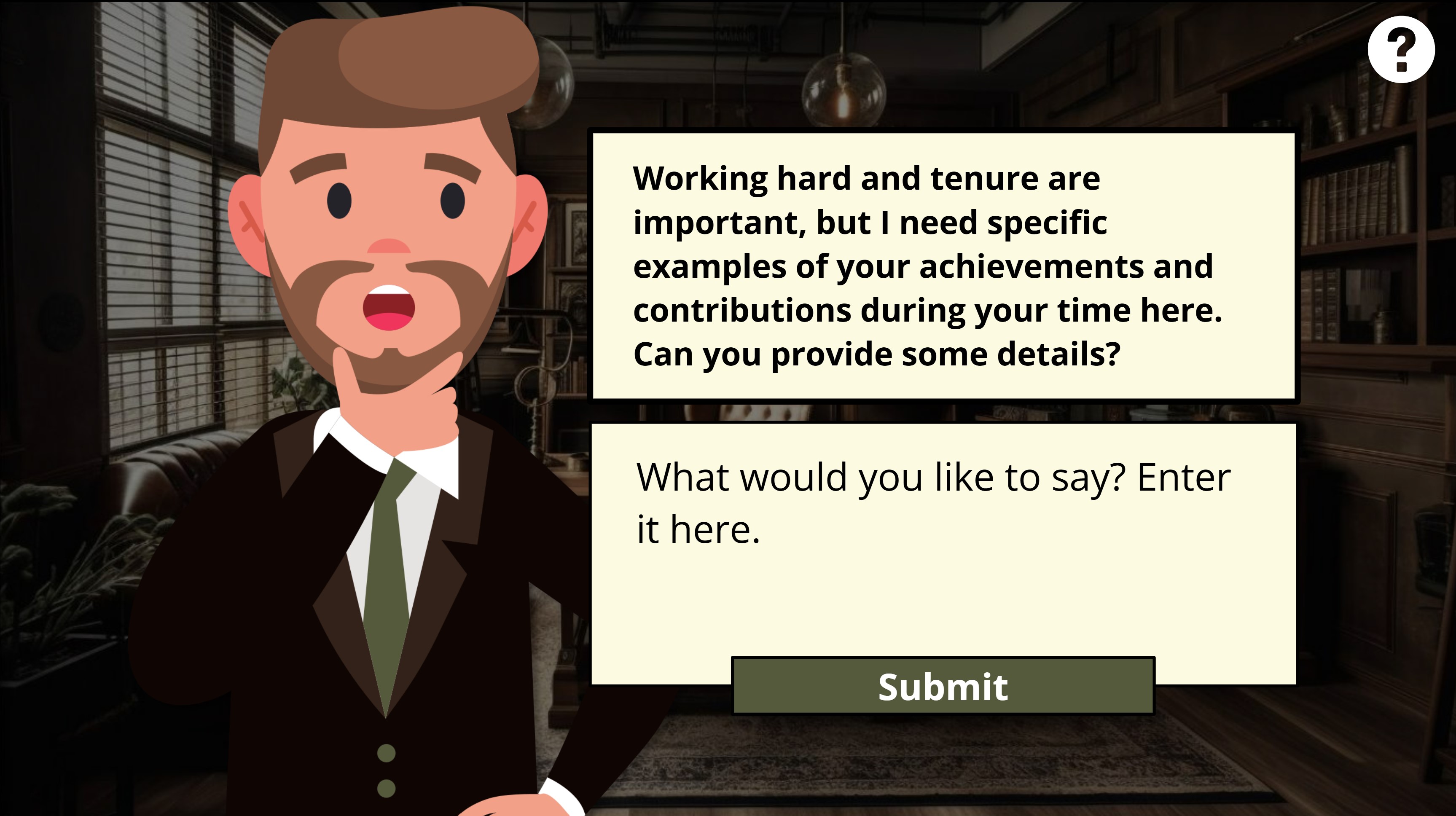
But the conversation isn't an open-ended AI role-play.
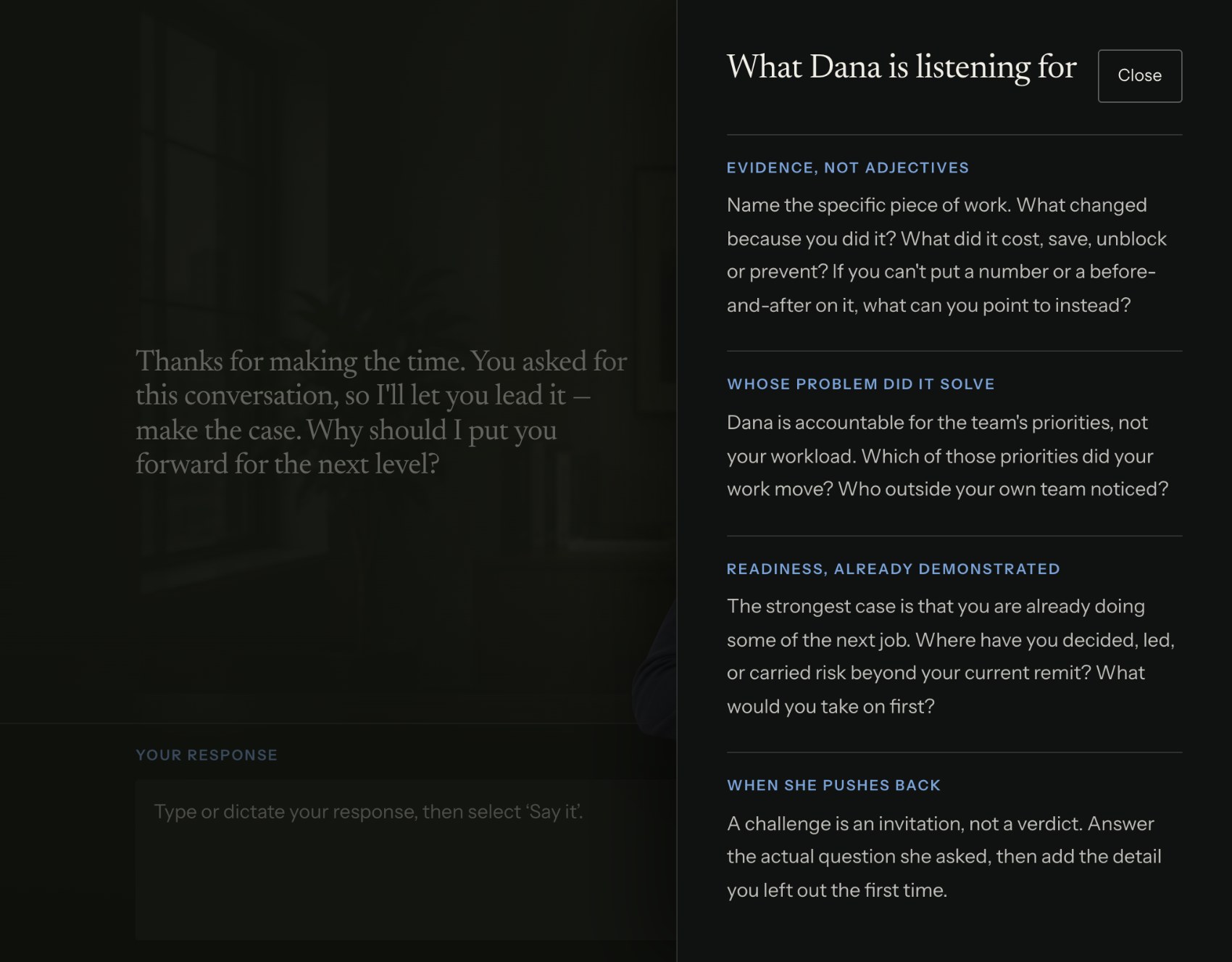
The three goals structure what happens underneath. A vague claim draws a push for evidence; an achievement with no stated impact draws a challenge on alignment; readiness has to be shown before the manager is persuaded.
It has the logic of an escape room: there is a way out, but only by demonstrating the learning.
AI improvises. I design what it's for.
My prompt defines the learning goals, what the manager looks for, what prompts a challenge and what counts as a persuasive case. Generative AI supplies the words, interprets unrestricted responses and returns structured data the experience acts on — driving not just what she says but how she reacts.
The model improvises the conversation. It doesn't decide the learning.
That's what separates this from asking ChatGPT to role-play a promotion conversation. The conversation is open-ended. The learning isn't.
Digging deeper
A year later, the technology had moved on. Generative AI had improved, and AI-assisted development had changed what I could build on my own. The learning design still held up, but the technology had changed what was practical to build.
If I kept the learning design, what could the technology now let me do differently?
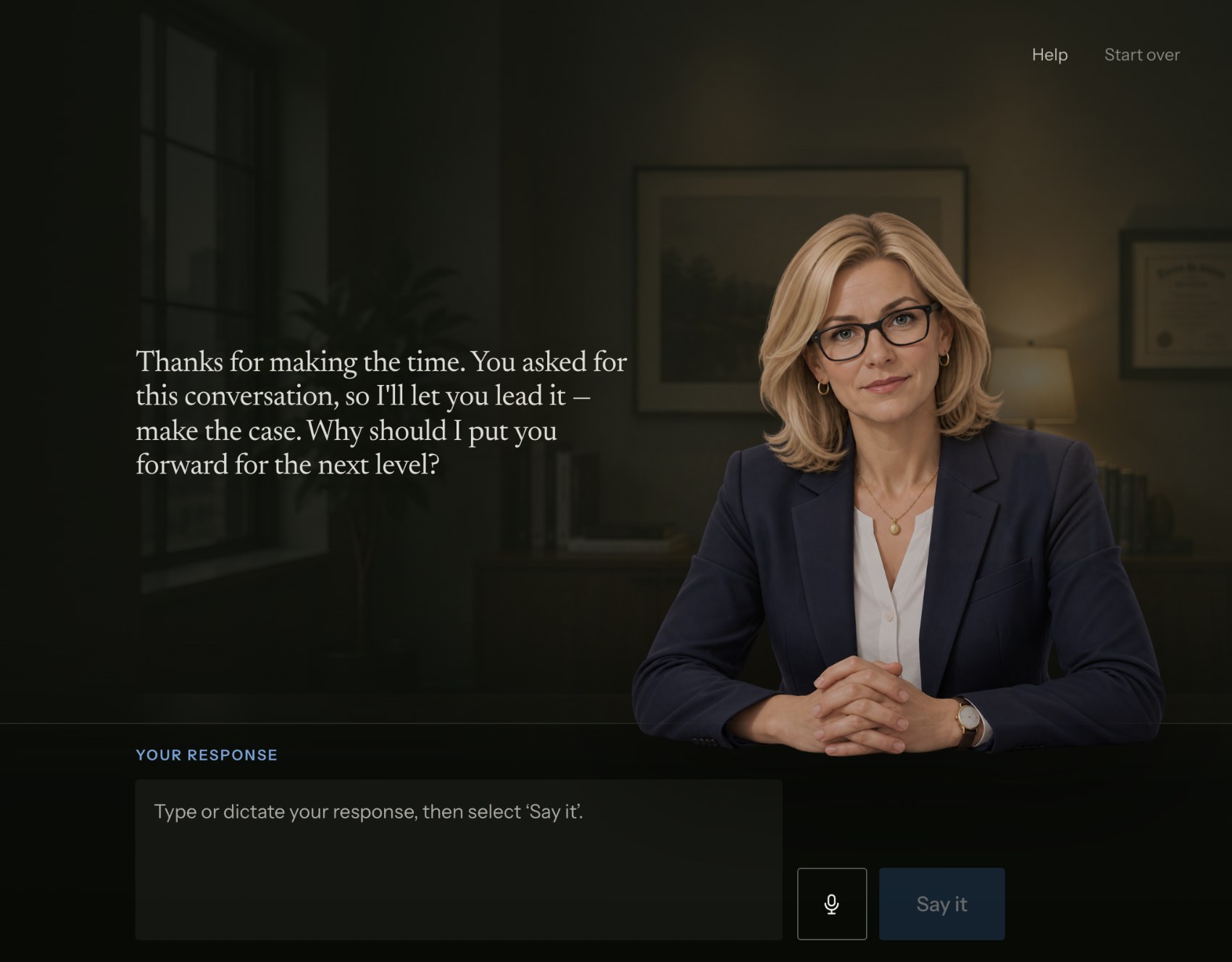
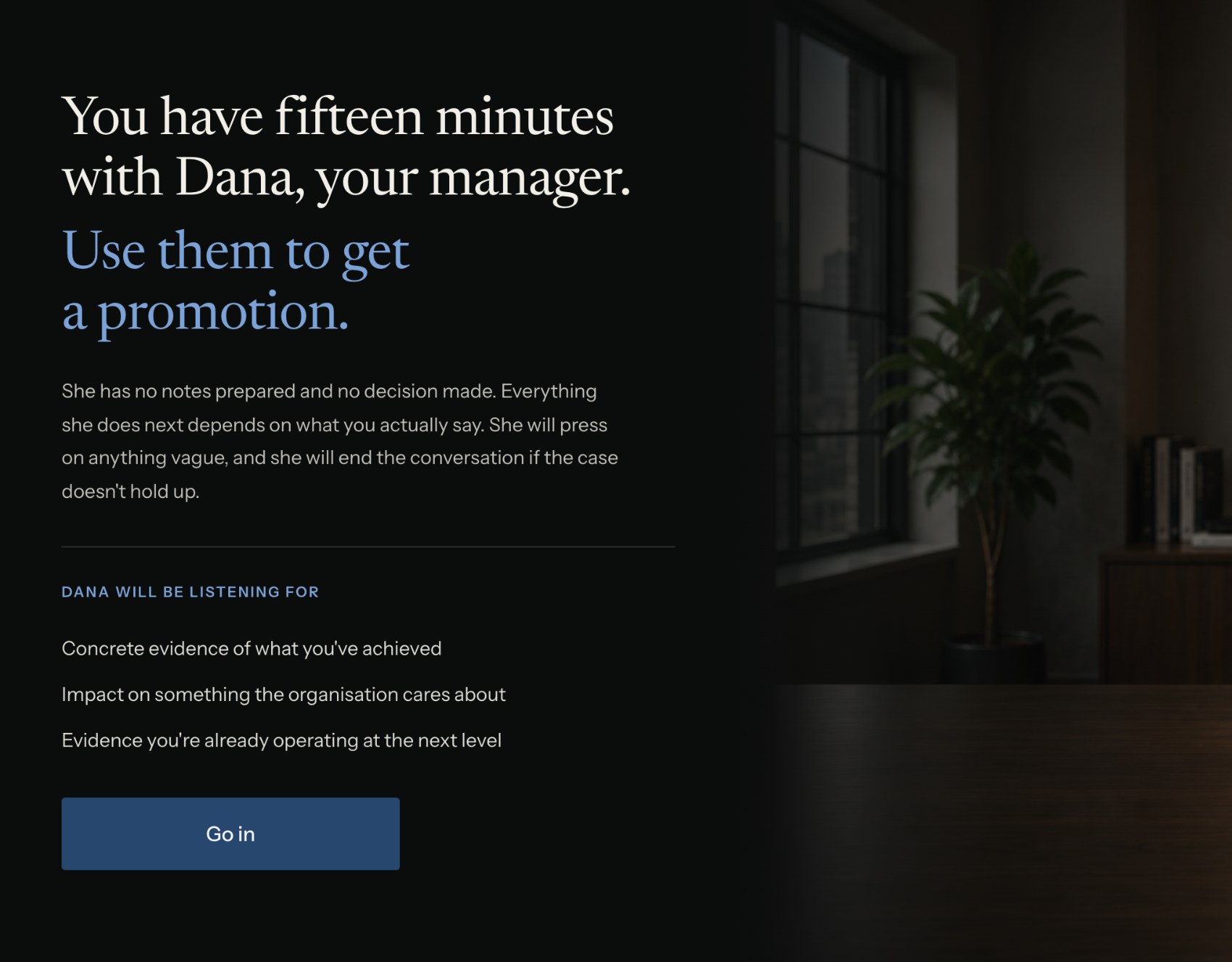
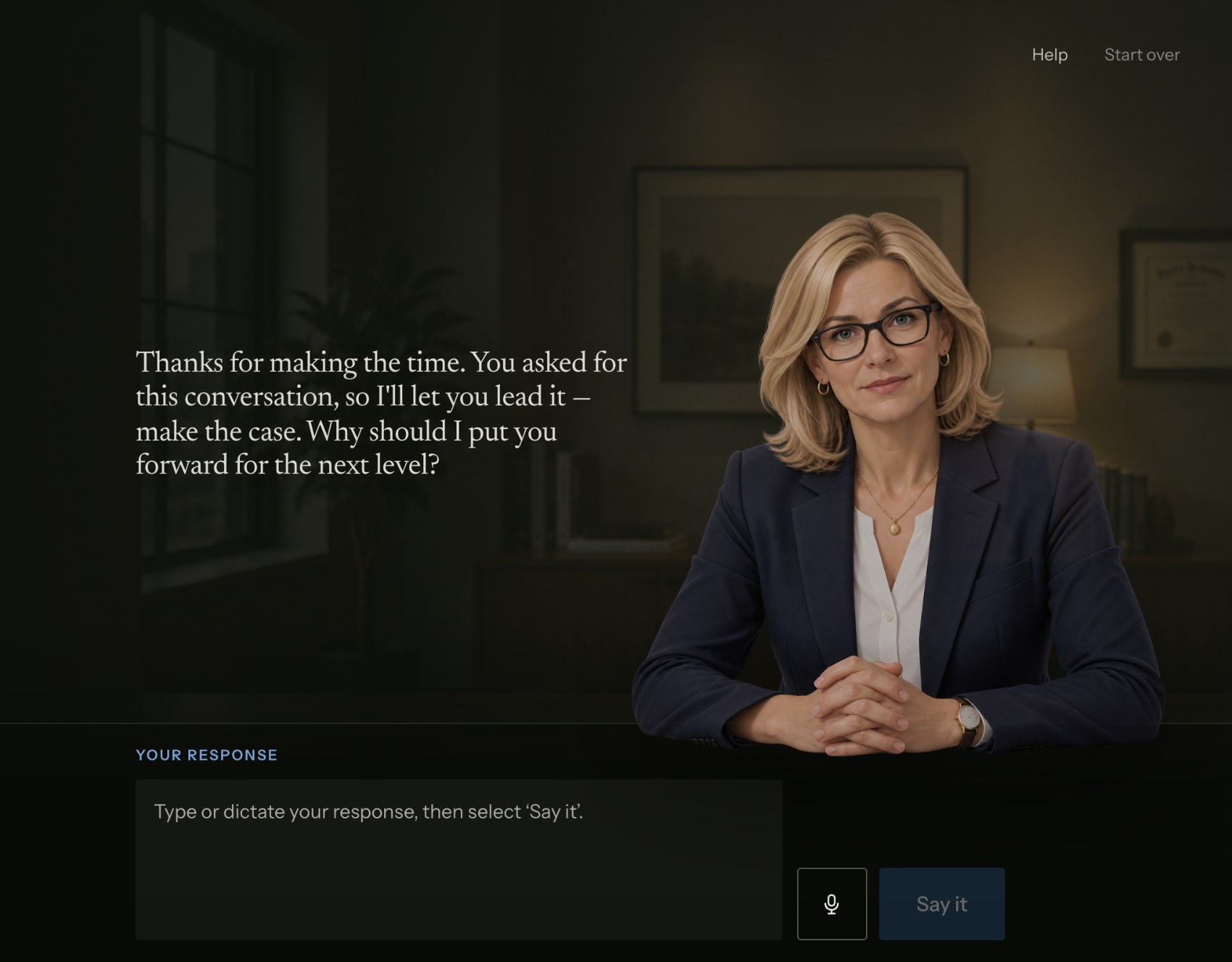
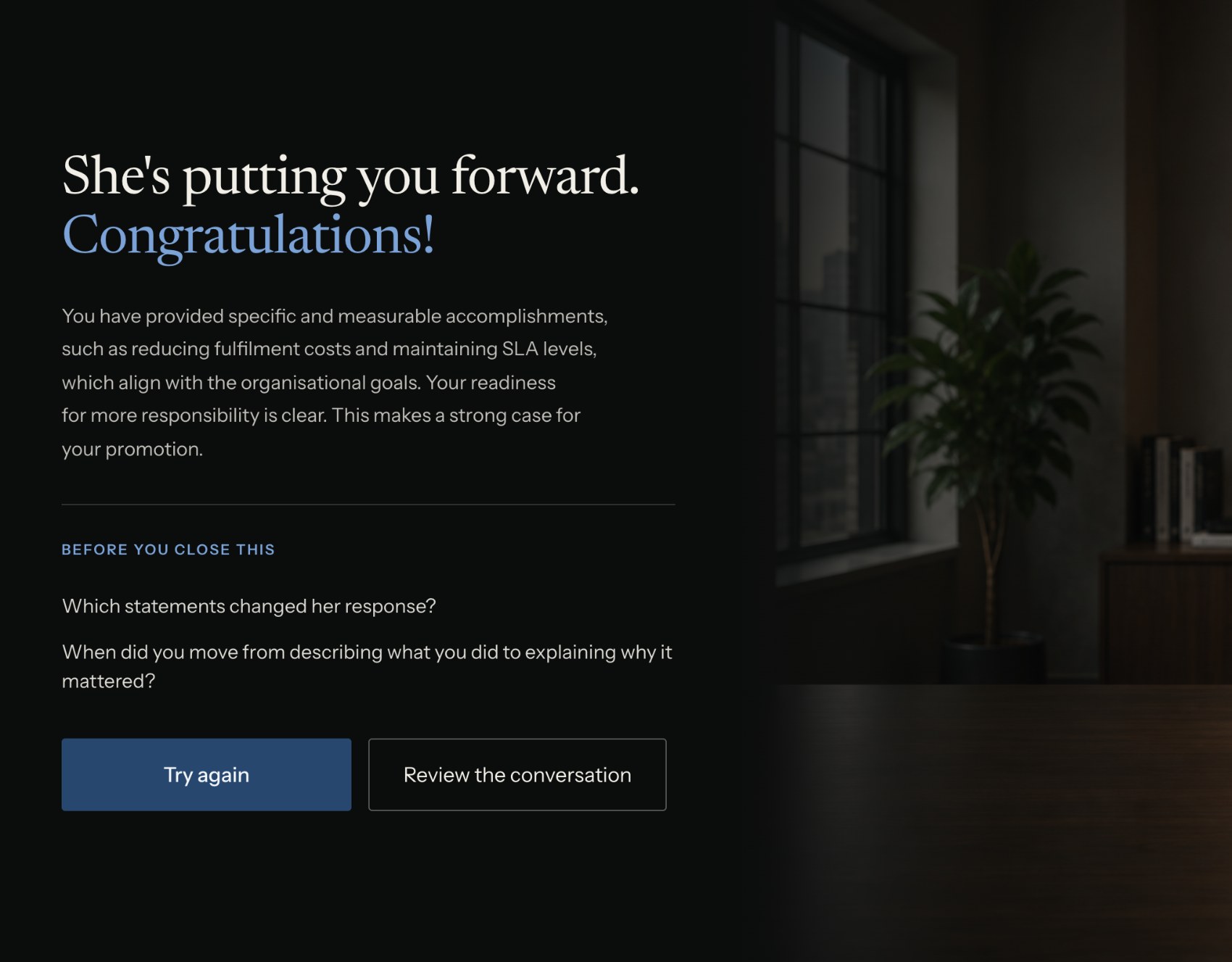
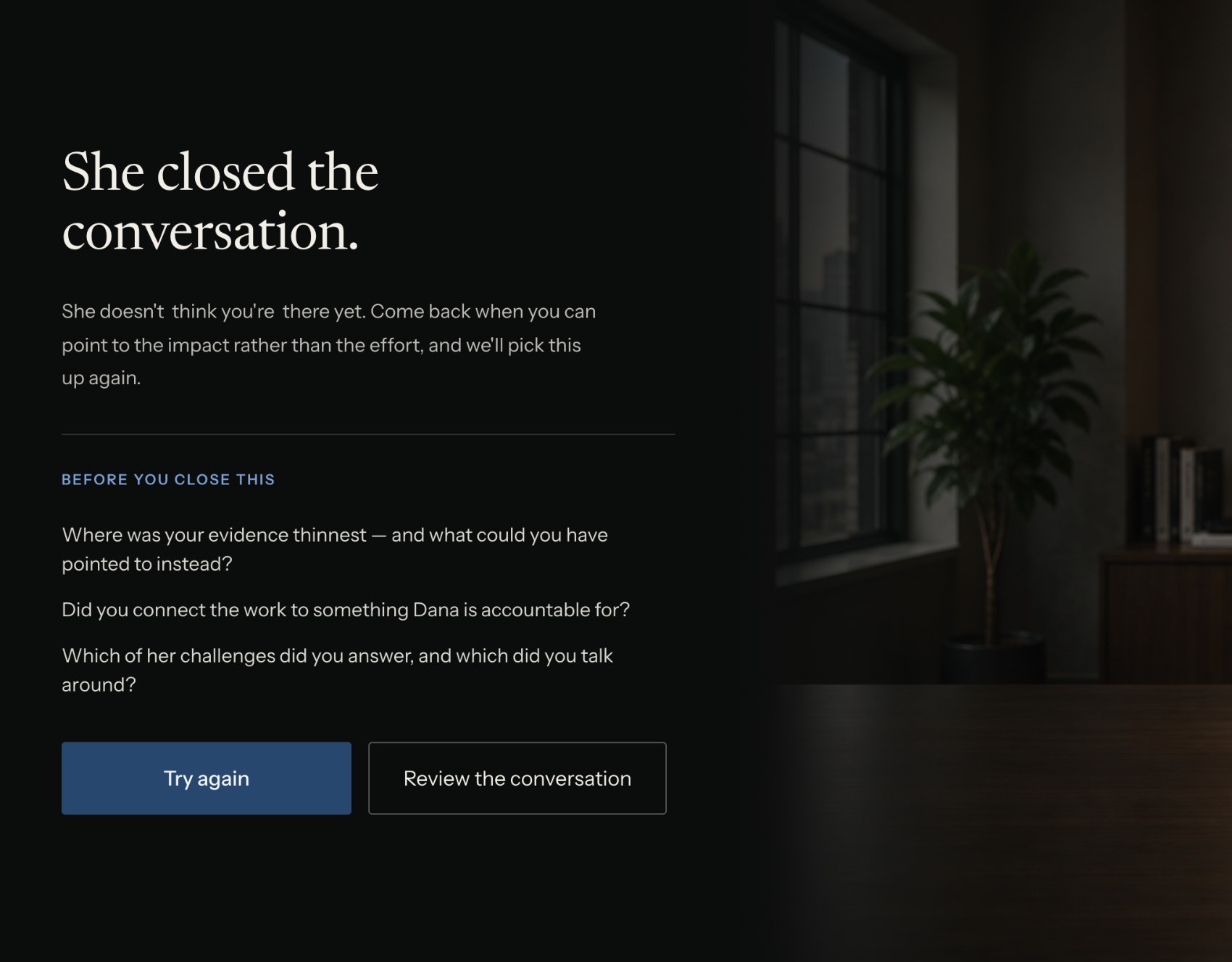
Using Claude Design, I rebuilt it as a web-based experience. A new manager, Dana, stays present throughout, her expression and the room's lighting shift with the learner's performance, and learners can respond by voice or text. AI-assisted development made it much faster to build, test and iterate on these ideas.



{{ slideLabel }} {{ slideText }}
The AI-enabled architecture
The rebuild wasn't only visual. I also reworked the technical architecture so the AI connection could be reused beyond a single build.
JavaScript
Captures learner responses and uses structured AI outputs to control Dana's dialogue, expression and simulation states.
AWS Lambda
Provides a backend layer between the experience and the OpenAI API.
Reusable architecture
Separates the AI logic from the interface, making it easier to reuse and adapt the same approach in future experiences.
What changed — and what didn't
The two versions look nothing alike. Underneath them is the same learning design.
What stayed
Evidence, alignment and readiness as the performance goals.
Open-ended learner responses.
An adaptive manager.
Challenge and consequence.
Success based on demonstrating the behaviors.
What changed
The technology used to build the experience.
A more immersive, responsive environment.
Learners can now speak their response.
State changes extended to the background.
Reusable architecture that can carry across to new projects.
What stayed
Evidence, alignment and readiness as the performance goals.
Open-ended learner responses.
An adaptive manager.
Challenge and consequence.
Success based on demonstrating the behaviors.
What changed
The technology used to build the experience.
A more immersive, responsive environment.
Learners can now speak their response.
State changes extended to the background.
Reusable architecture that can carry across to new projects.
Better technology didn't give me a reason to replace the learning strategy. It gave me a chance to take the same learning design further.
Looking forward
The second version isn't an endpoint. One constraint is already beginning to disappear: the turn-based interface.
Learners can type or speak, but the experience still runs as an exchange: respond, submit, wait, reply. Real-time voice could remove much of that interface altogether. Evidence, alignment and readiness would still determine what Dana listens for and what the learner has to demonstrate.
The technology will keep evolving. The learning design gives it purpose.