Connection is built in small moments
A self-directed concept scenario that puts a new barista behind the till. Research on frontline service says connection is made in brief personal moments, so I designed practice at those moments rather than a course about service standards.
- Role
- Sole designer
- Sector
- Retail & hospitality
- Format
- Branching scenario
- Tools
- Storyline · Illustrator · Generative AI
The problem
Coffeehouses train their baristas on service standards and still collect reviews that say the service was fine, and nothing more. The behaviors that turn a transaction into a relationship are well known and unevenly used.
Most training answers this with more information: policies, values, a refreshed module on customer-centricity. That treats it as a knowledge gap. My own frontline experience suggested a different problem: this was not a knowledge gap.
Baristas know what good service looks like. The opportunity to use it passes in seconds.
Digging deeper
Two sources shaped this: published research on frontline service behavior, and my own years working in the sector. Three findings mattered.
Small interpersonal behaviors can build rapport and influence how customers experience a service interaction.1
Personalization is context-dependent. Even something as simple as using a customer’s name can strengthen rapport when it feels appropriate, but can have the opposite effect when it does not.2
Research into contextual decision-making also supports giving learners opportunities to notice and use relevant cues within a simulated environment.3
The gap was recognition, not recall.
For a new barista, knowing the behaviors wasn’t enough. They needed to recognize the opportunity to use them while serving a customer. That insight changed the design: instead of explaining good customer service and testing recall, I recreated the moment in which the decision happens.
Into the design
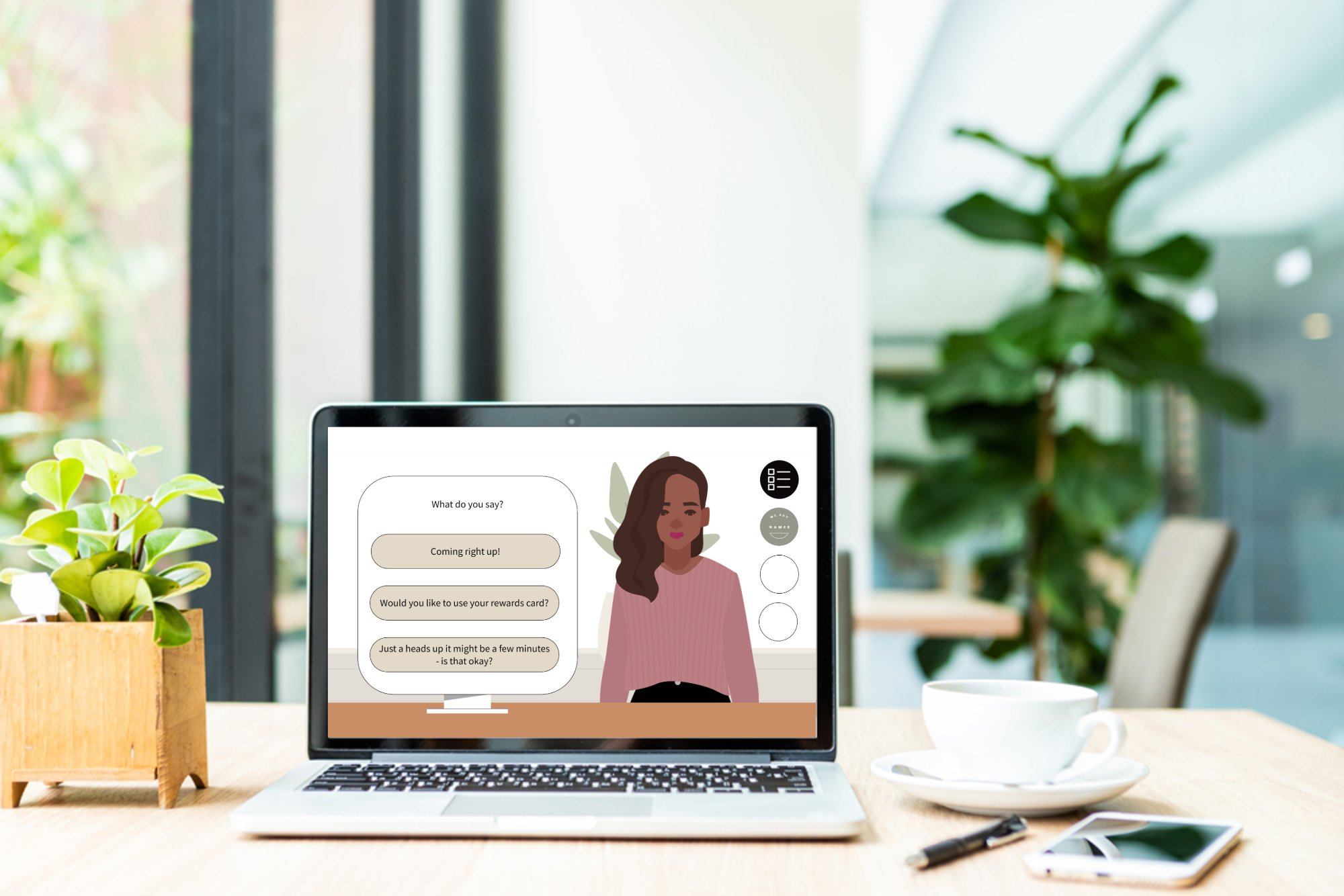
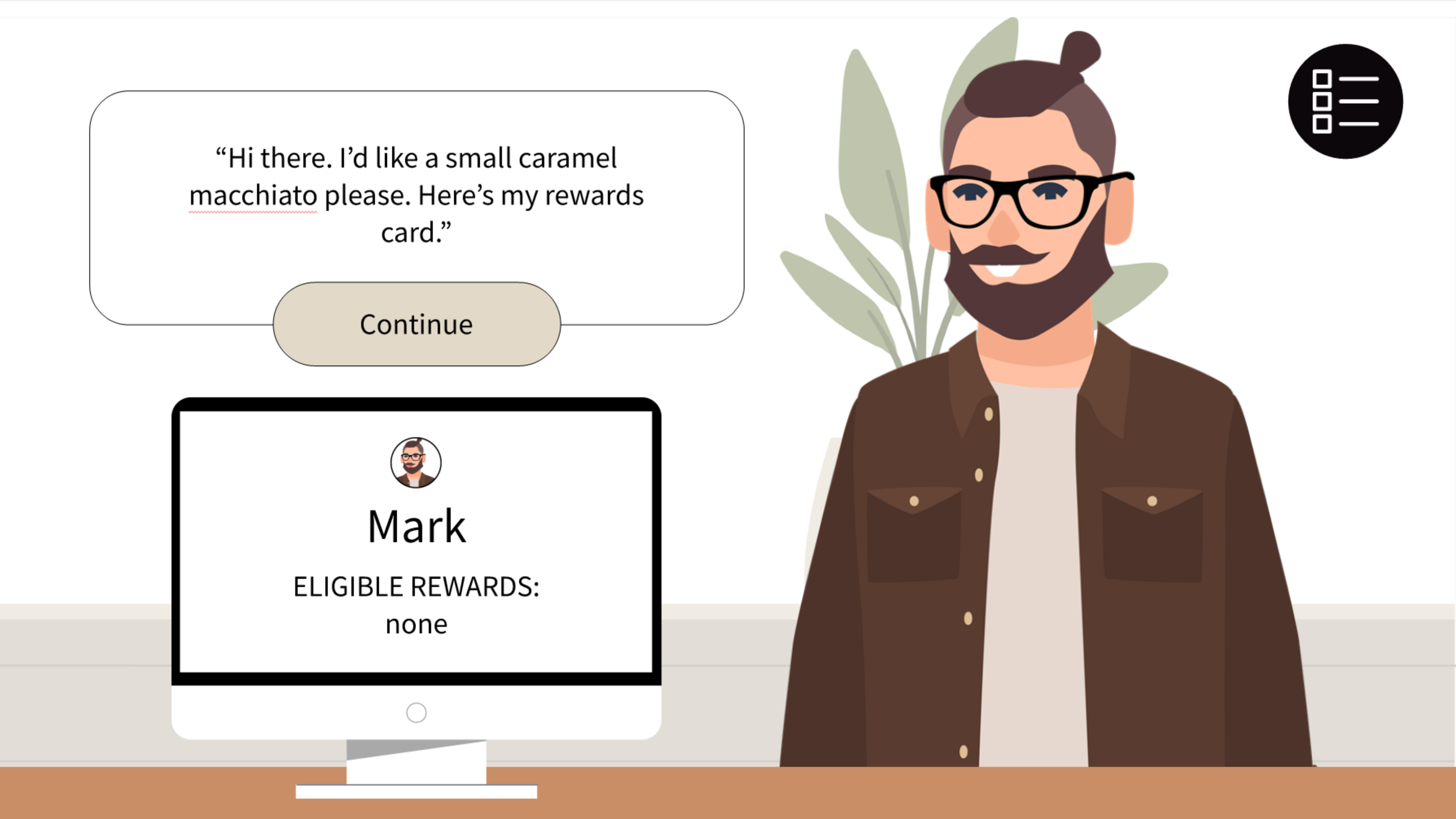
The Storyline scenario recreates the counter. Customers approach the till, transaction information appears on screen and the cues sit inside that environment: scanning a rewards card reveals the customer’s name, a birthday notification appears when relevant. The learner has to notice and decide how to respond.
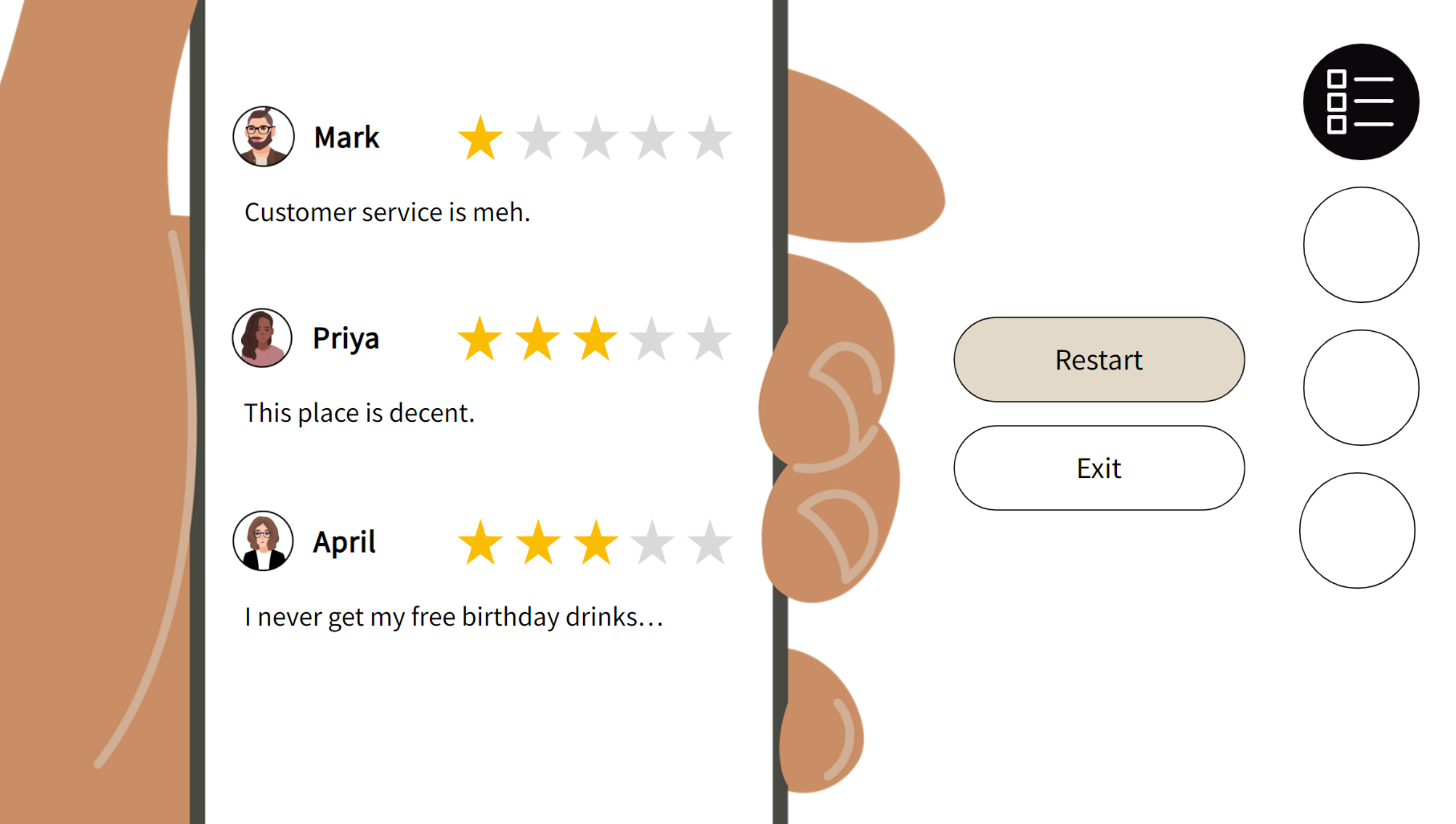
Those decisions accumulate. At the end, customer reviews reflect their performance — consistently effective choices earn five stars, missed opportunities earn fewer.
What I designed
A shift at the till, told through three customers. Each design decision follows from the finding above.
Three behaviors
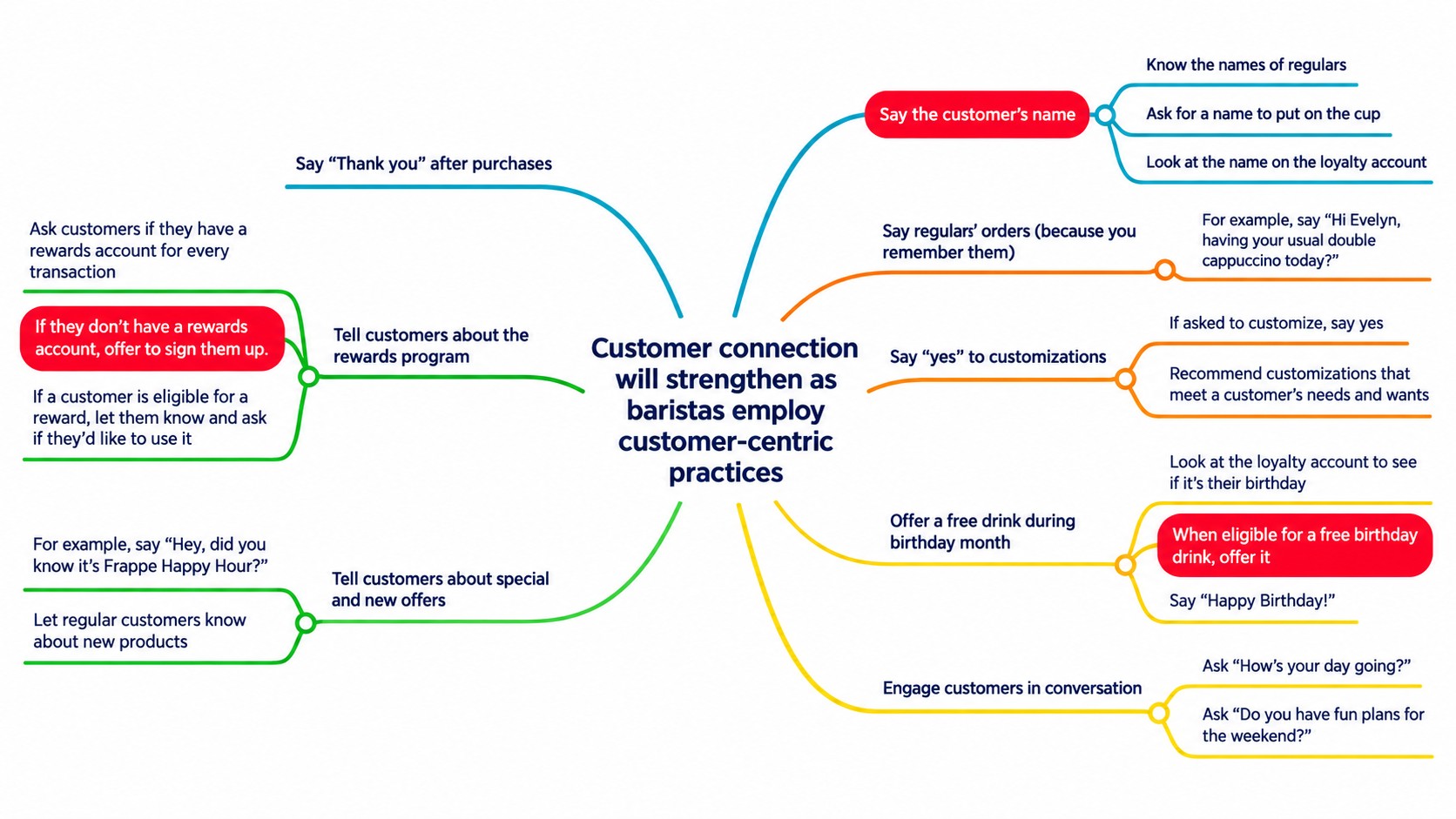
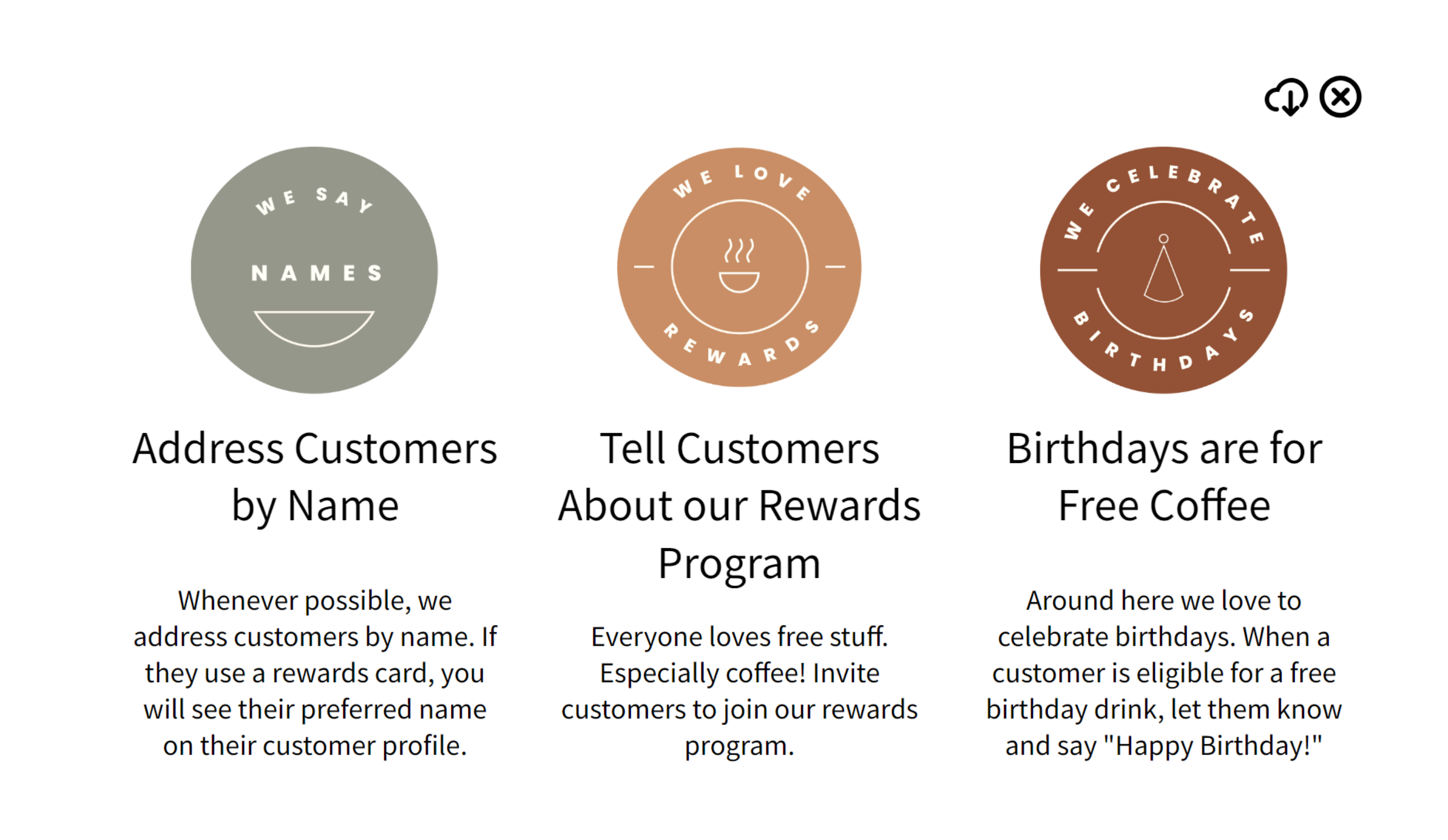
Action mapping reduced customer-centricity to three things a barista does: say the name, offer the reward, mark the birthday. Everything else was cut.
Decisions, not questions
Every screen asks what you say next to the person in front of you. No knowledge checks, because the knowledge was never the problem.
The cue in view
The customer profile on the till shows the name and eligible rewards. Learners practice reading the cue, not remembering that one exists.
Help at the counter
The tip sheet is a job aid pinned to the till, available at any point. It models what support looks like in the real setting rather than front-loading it as content.
Consequence you can see
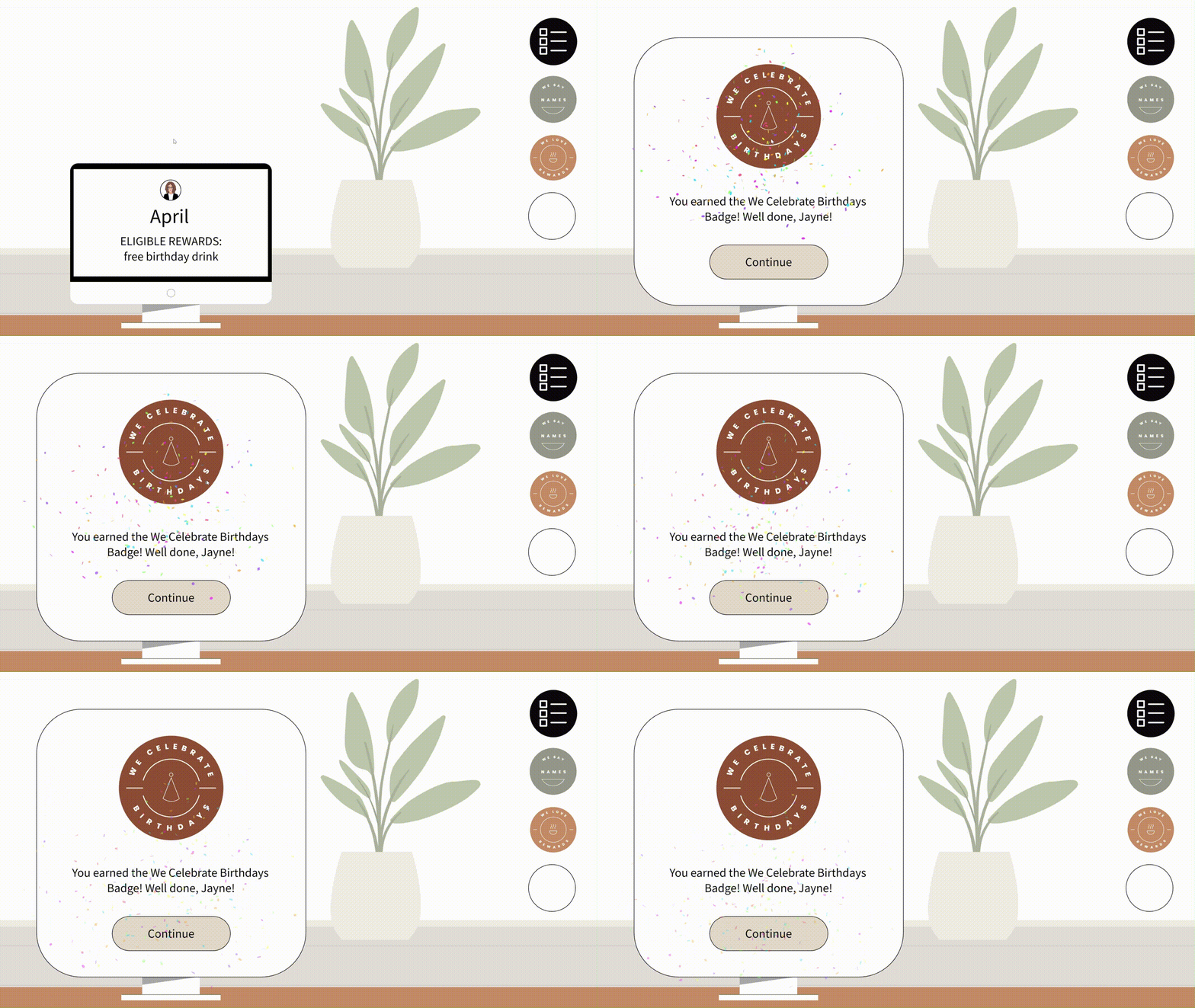
Badges mark each behavior as it is used, and the shift ends in the customer reviews you earned. Miss the moments and the stars say so.
On AI
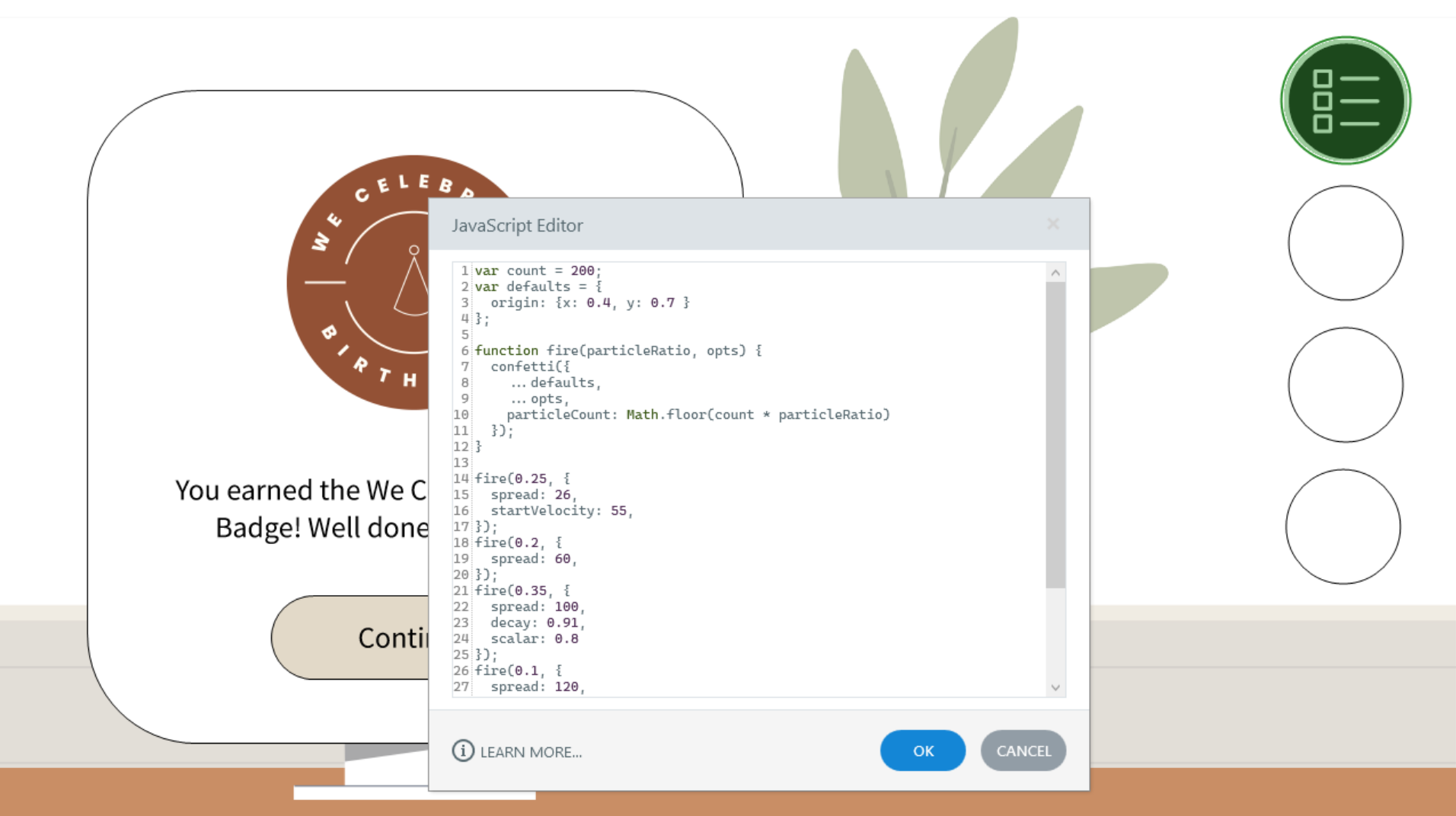
I used generative AI to draft dialogue variations and to write the JavaScript behind the celebration animation — work I could specify but not hand-code. The behaviors, the branching and the feedback logic were design decisions I made from the map.
Process
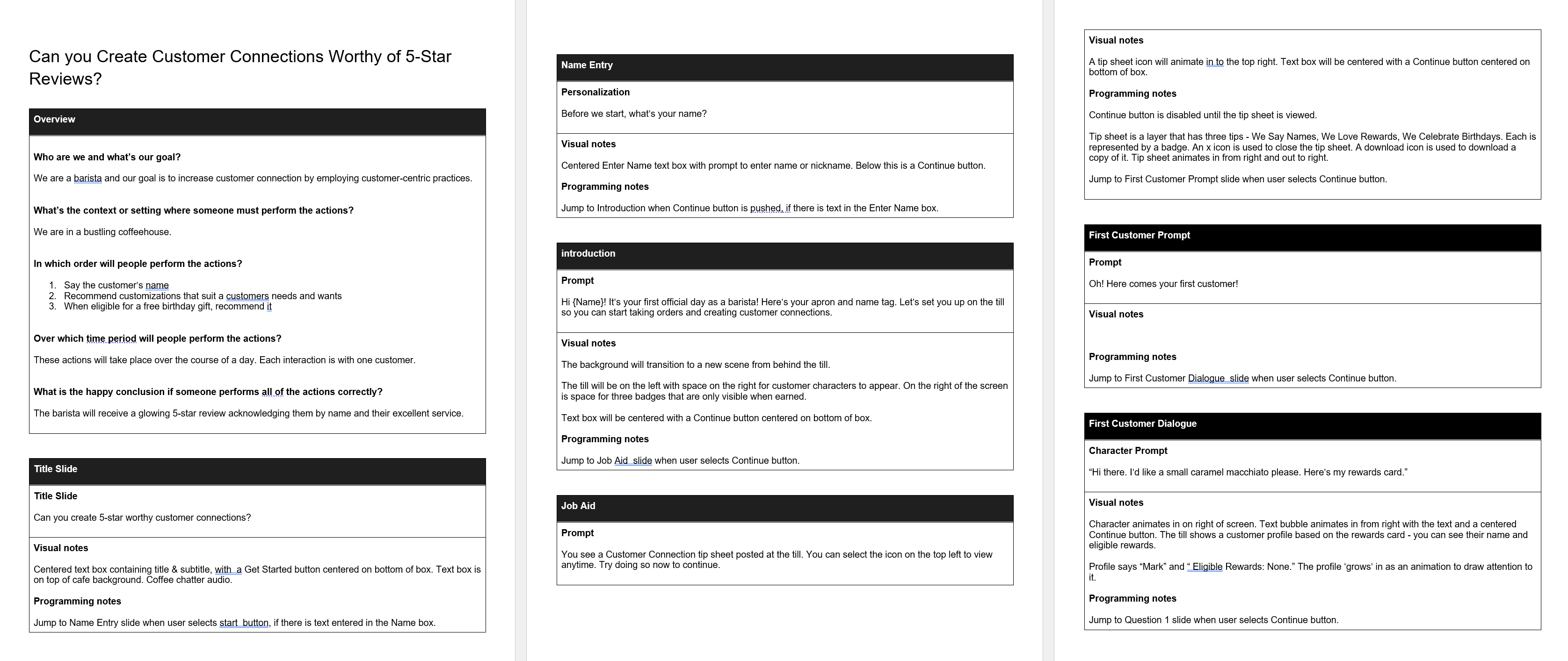
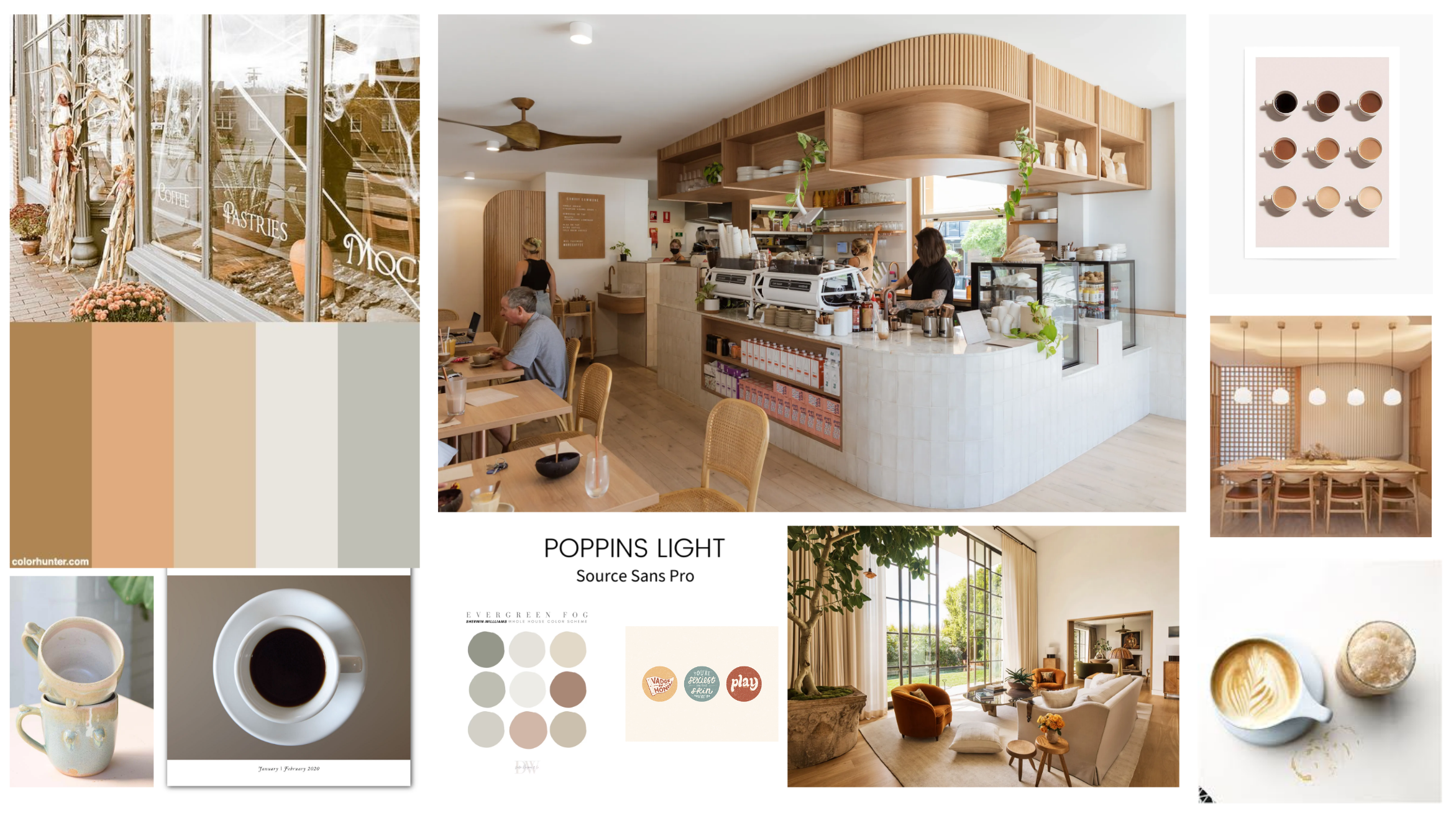
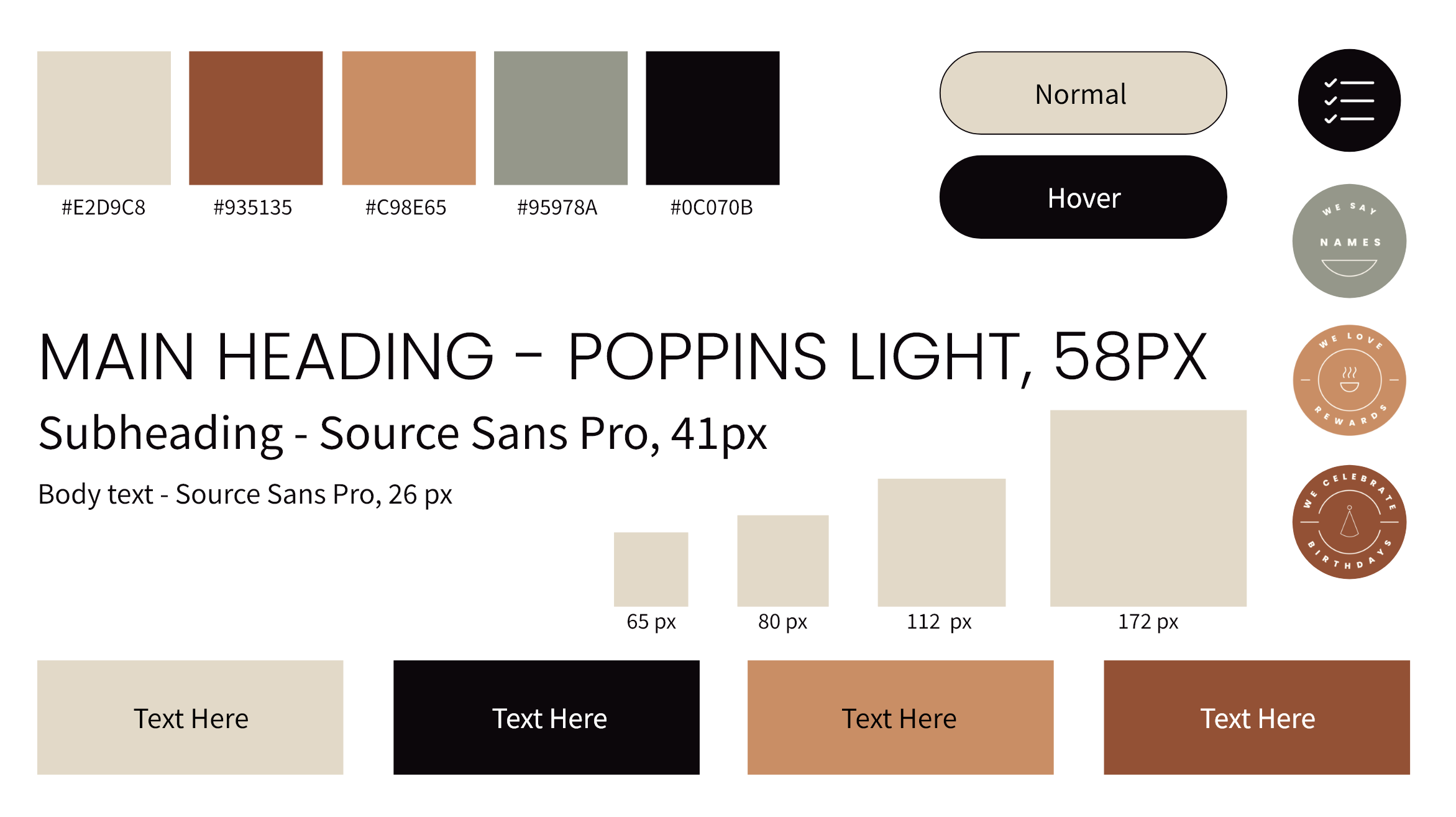
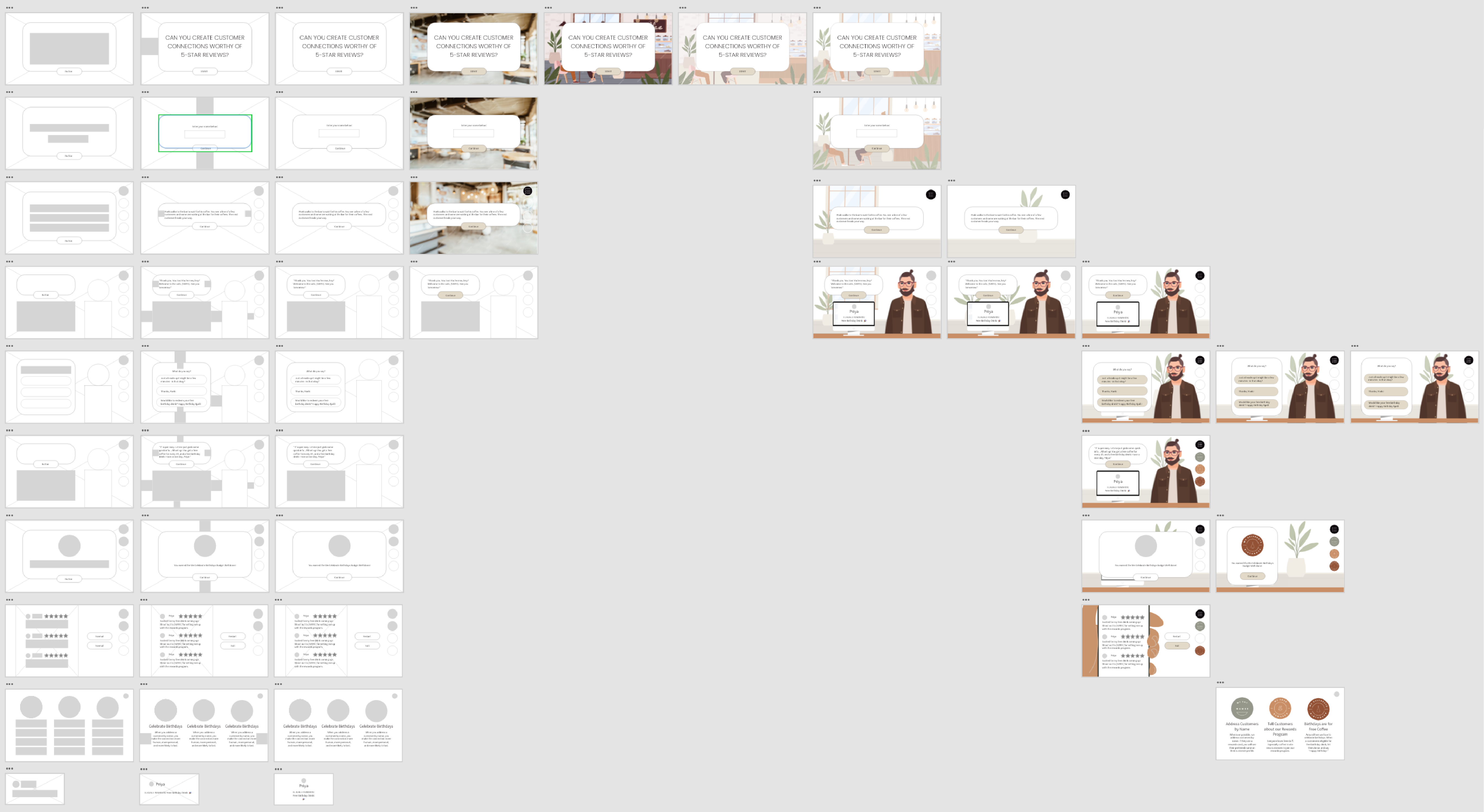
From map to storyboard to a built, tested scenario.
How I would evaluate it
This is a self-directed piece, so there are no deployment figures to report. In a live implementation I would not measure completion or quiz scores. I would look at the counter.
Concretely, I would compare observed use of the three target behaviors before and after the intervention, supported by customer feedback where available.
Are baristas recognizing and acting on opportunities to make an interaction personal?
Reflection
Connection happens in small moments, not through more information.
I learned how much design work happens before anything is built. The action map did the hard thinking: once the goal was reduced to three observable behaviors, the scenario, the job aid and the feedback all followed from it.
It also changed how I treat authoring tools. Specifying what I needed and using AI to write the code got me past the tool's limits, which is now how I approach anything the software will not do on its own.
Sources
- 1 Lindsey-Hall, K. K., Jaramillo, S., Baker, T. L. & Bachrach, D. G. (2023). An examination of frontline employee–customer incidental similarities in service failure and recovery contexts. Psychology & Marketing, 40(6), 1047–1060. DOI
- 2 Srinivasa Raja, S. V., Cheng, Y. & Danaher, T. S. (2026). Call me by my name: The effects of addressing customers by their names, the underlying mechanisms, and the boundary conditions. Journal of Retailing. DOI
- 3 Chien, C. C., Ho, Y. T. & Hou, H. T. (2024). Integrating immersive scenes and interactive contextual clue scaffolding into decision-making analysis ability training game. Journal of Educational Computing Research, 62(1), 376–405. DOI